About the Department
Established in the year 2007, Department of Electronics & Communication Engineering offers an Undergraduate programme (B.Tech) and two Postgraduate programmes (M.Tech) – VLSI System Design
The B.Tech programme of the department is approved by AICTE. The department aims to provide the best quality education at both graduate and postgraduate levels besides to encourage research and development for achieving academic excellence. Our department has a team of highly qualified and experienced teaching faculty and a young, dynamic staff team. The faculty members are given ample opportunities for professional advancement by the department.Our department has solid infrastructure such as full-fledged laboratories equipped with modern equipment and software. We equip ourselves with modern instruments and teaching aids to enhance the core technical skills of our students. Our ECE branch organizes industrial visits, guest lectures, seminars, workshops, and symposiums to provide the students with the experience that will transform them into engineers, leaders, and entrepreneurs. Our ECE department prepares the students for stellar careers as researchers, academicians, professionals, entrepreneurs and others in core industries such as IT, robotics, automotive, mechatronics, telecommunication, and aerospace.
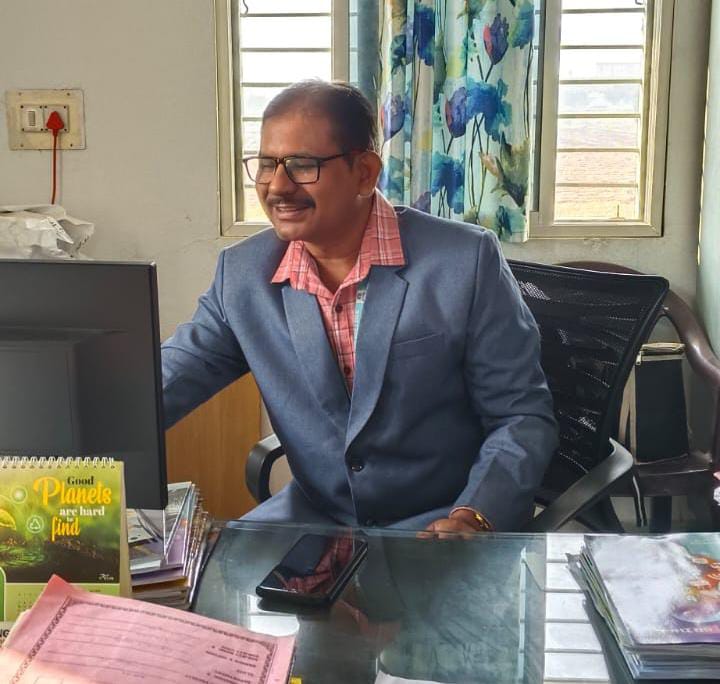
Vision & Mission
Vision
"To produce highly skilled, creative and competitive Electronics and Communication Engineers to meet the emerging needs of the society."
Mission
- "To impart a strong foundational knowledge and essential skills through innovative teaching and hands-on learning experiences, enabling graduates to effectively identify, analyse, and solve complex engineering problems"
- "To promote critical thinking, ethical practices, and social responsibility, preparing students to excel in diverse professional environments while fostering a commitment to lifelong learning and continuous professional development."
- "To cultivate well-rounded competencies and complementary skills in students, empowering them for successful careers, advanced studies, and entrepreneurial ventures, while instilling a strong sense of professional ethics and social awareness aligned with societal needs"
Program Assessment Committee (PAC)
| S.No | Name | Designation | Address |
|---|---|---|---|
| 1 | Dr.G.Lakshminarayana | Professor &HoD | Chairman |
| 2 | Dr.K.Mallikarjuna | Professor | Convener |
| 3 | Dr.K.Vasudeva Reddy | Professor | Member |
| 4 | C.Subhaskara Reddy | Associate Professor | Member |
| 5 | S.Mohan Das | Assistant Professor | Member |
Department Advisory Committee (DAC)
The Department Advisory Committee (DAC) plays a vital role in guiding the department in academic planning, curriculum development, industry interaction, and overall quality improvement.
| S.No | Name | Role |
|---|---|---|
| 1 | Dr.G.Lakshminarayana | Chairman |
| 2 | Dr.K.Mallikarjuna | Convener |
| 3 | Dr.K.Vasudeva Reddy | Member |
| 4 | Dr D Raghunatha Rao | Member |
| 5 | Dr C V Subhaskara Reddy | Member |
| 6 | Mr N Nageshwara Reddy | Industry (Cyient, Hyderabad) |
| 7 | Shaik Babu Rayhan | Alumni (Infosys, Hyderabad) |
| 8 | Shaik Alfina | Alumni (TCS, Hyderabad) |
Program Outcomes (POs), PEOs & PSOs
Program Outcomes (POs)
| PO No | Graduate Attribute | PO Statement |
|---|---|---|
| 1 | Engineering Knowledge | Apply the knowledge of mathematics, science, engineering fundamentals, and an engineering specialization to the solution of complex Engineering problems. |
| 2 | Problem Analysis | Identify, formulate, review research literature, and analyze Complex engineering problems reaching substantiated conclusions using first principles of mathematics, natural sciences, and engineering sciences. |
| 3 | Design/Development of Solutions | Design solutions for complex engineering problems and design system components or processes that meet the specified needs with appropriate consideration for the public health and safety , and the cultural, societal , and environmental considerations. |
| 4 | Conduct Investigations of Complex Problems | Ability to review research literature, use research methods to execute project and synthesize the problem to provide valid conclusions. |
| 5 | Modern Tool Usage | Create, select, and apply appropriate techniques, resources, and modern engineering and IT tools including prediction and modeling to complex engineering activities with an understanding of the limitations. |
| 6 | The Engineer and Society | Apply reasoning informed by the contextual Knowledge to assess societal, health, safety, legal and cultural issues and the consequent responsibilities relevant to the professional engineering practice. |
| 7 | Environment and Sustainability | Understand the impact of the professional engineering solutions in societal and environmental contexts, and Demonstrate the knowledge of, and need for sustainable development. |
| 8 | Ethics | Apply ethical principles and commit to professional ethics and responsibilities and norms of the engineering practice. |
| 9 | Individual and team work | Function effectively as an individual, and as a member or leader in diverse teams, and in multidisciplinary settings. |
| 10 | Communication | Communicate effectively on complex engineering activities with the engineering community and with society at large, such as, being able to comprehend and write effective reports and design documentation, make effective presentations, and give and receive clear instructions. |
| 11 | Project Management and Finance | Demonstrate knowledge and understanding of the engineering and management principles and apply these to one’s own work, as a member and leader in a team, to manage projects and in multidisciplinary environments. |
| 12 | Life-long Learning | Recognize the need for, and have the preparation and ability to engage in independent and life-long learning in the broadest context of technological change. |
Program Educational Objectives (PEOs)
| PEO No | Statement |
|---|---|
| PEO1 | Graduates apply their knowledge of mathematics and science to identify, analyze and solve problems in the field of Electronics and develop sophisticated communication systems |
| PEO2 | Graduates embody a commitment to professional ethics, diversity and social awareness in their professional career. |
| PEO3 | Graduates exhibit a desire for life-long learning through technical training and professional activities. |
Program Specific Outcomes (PSOs)
| PSO No | Statement |
|---|---|
| PSO1 | Apply the fundamental concepts of electronics and communication engineering to design a variety of components and systems for applications including signal processing, image processing, communication, networking, embedded systems, VLSI and control system |
| PSO2 | Select and apply cutting-edge engineering hardware and software tools to solve complex Electronics and Communication Engineering problems |
Board of Studies (BoS)
| S.No | Name | Designation |
|---|---|---|
| 1 | Dr.G.Lakshmi Narayana | BoS Chairman |
| 2 | Dr.K.Mallikarjuna | Prof. , SVREC, Nandyal |
| 3 | Dr.M.M.Raghavendra | Prof. , SVREC, Nandyal |
| 4 | Dr.K.Vasudeva Reddy | Prof. , SVREC, Nandyal |
| 5 | Dr.D.Raghunatha Rao | Asso. Prof., SVREC, Nandyal |
| 6 | S.Mohandas | Asso Prof , SVREC, Nandyal |
| 7 | S.Arif Hussain | Asso Prof, SVREC, Nandyal |
| 8 | NMD.Mohasinul Huq | Asst Prof , SVREC, Nandyal |
| 9 | Dr.K.Lakshminarasimha | Asst Prof , SVREC, Nandyal |
| 10 | Prof.G.Ramachandra Reddy | Senior Professor, DSP Division, SENSE, VIT University, Vellore |
| 11 | Prof. Palanisamy | Professor., Dept. of ECE, NIT, Tiruchi. |
| 12 | Dr.V. Sumalatha | Professor, Dept. of ECE, JNTUA College of Engineering, Anantapur |
| 13 | Sri.Indranil Som | Senior Engineer Technical Lead , Lemonflip Solutions West Bengal. |
| 14 | Sri K.Venkata Sreeharsha | Design Engineer, Waferspace Semiconductor, Bangalore |
Programs Offered
B.Tech (ECE)
Intake: 120 seats
M.Tech (VLSI SYSTEM DESIGN)
Intake: 18 seats
Academic Calendar
Download the latest academic calendar for the current semester.
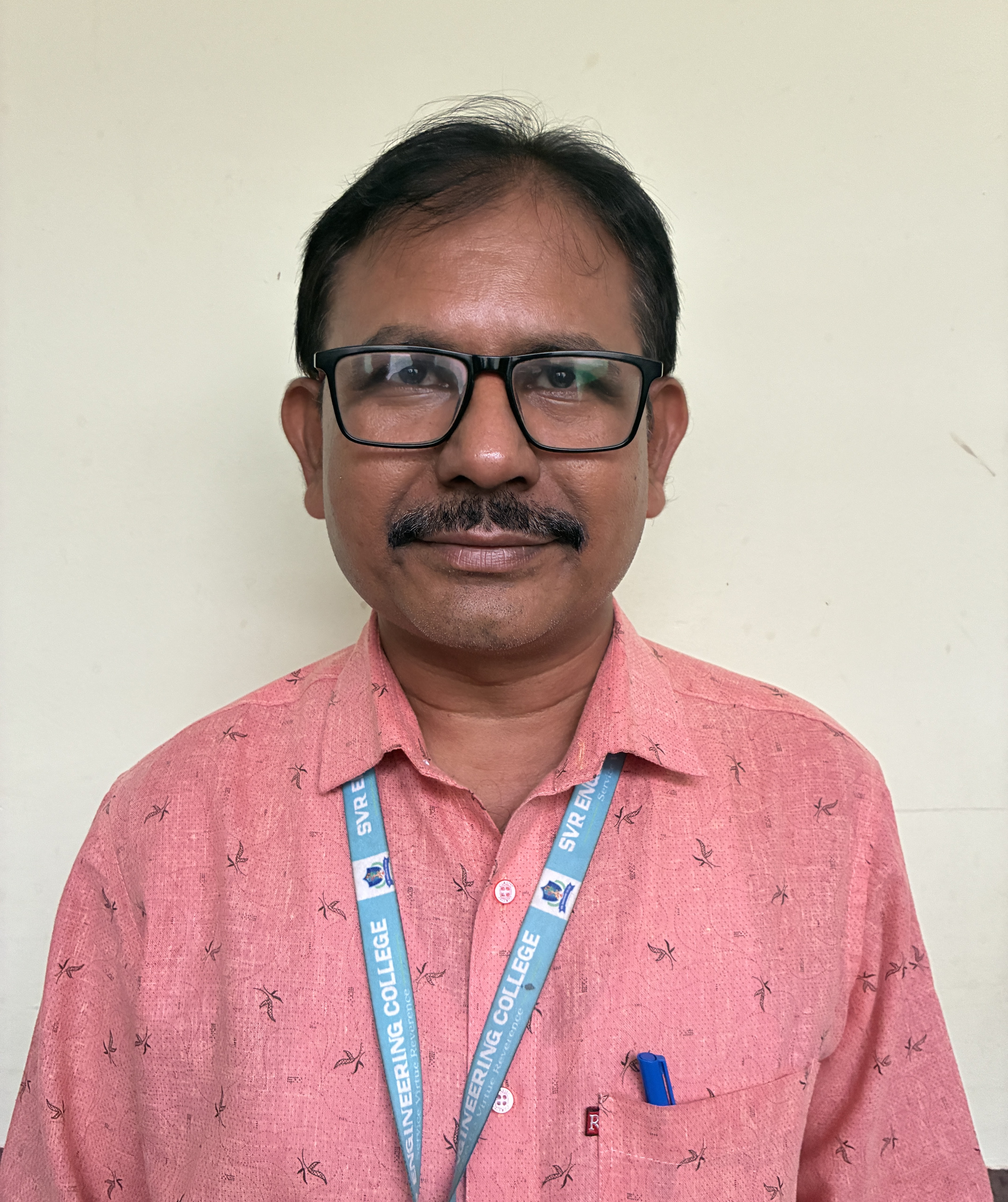
HOD's Message
Dr.G.Lakshminarayana
Dr.G.Lakshminarayana
Professor and Head of the Department
ELECTRONICS AND COMMUNICATION ENGINEERING
E-Mail : ecehod@svrec.ac.in
Our Faculty
| S.No | NAME OF THE FACULTY | DESIGNATION | QUALIFICATION |
|---|---|---|---|
| 1 | Dr. LAKSHMINARAYANA GAJULA | PROFESSOR & HOD | Ph.D |
| 2 | Dr. MALLIKARJUNA KETHEPALLI | PROFESSOR | Ph.D |
| 3 | Dr. VASUDEVA KUPPIREDDY | PROFESSOR | Ph.D |
| 4 | Dr. VENKATA REDDY SUBHASKARREDDY | ASSOCIATE PROFESSOR | Ph.D |
| 5 | Dr. DHAYIPULE RAGHUNATHA RAO | ASSOCIATE PROFESSOR | Ph.D |
| 6 | Dr. KASETTY LAKSHMINARASIMHA | ASSOCIATE PROFESSOR | Ph.D |
| 7 | Dr. REGIMANU BHARATH | ASSOCIATE PROFESSOR | Ph.D |
| 8 | Mr. SARI MOHANDAS | ASSOCIATE PROFESSOR | M.Tech(Ph.D) |
| 9 | Mr. SUNAR ARIF HUSSAIN | ASSOCIATE PROFESSOR | M.Tech(Ph.D) |
| 10 | Mr. MOHAMMAD NAYAB | ASSOCIATE PROFESSOR | M.Tech(Ph.D) |
| 11 | Mrs. SHEREESHA BARNALA | ASSISTANT PROFESSOR | M.Tech(Ph.D) |
| 12 | Mr. NARASIMHULU V VARAKUTI | ASSISTANT PROFESSOR | M.Tech(Ph.D) |
| 13 | Mr. JAYACHANDRANATH SADE | ASSISTANT PROFESSOR | M.Tech(Ph.D) |
| 14 | Mr. KAMIREDDY SESHIDAR | ASSISTANT PROFESSOR | M.Tech |
| 15 | Mr. SURA SREENIVASULU | ASSISTANT PROFESSOR | M.Tech |
| 16 | Mr. DHUPAM ASHOKKUMAR | ASSISTANT PROFESSOR | M.Tech |
| 17 | Mr. DASARI SINGAREDDY | ASSISTANT PROFESSOR | M.Tech |
| 18 | Mr. YERRAGUNTLA RAMA MOHAN REDDY | ASSISTANT PROFESSOR | M.Tech |
| 19 | Mr. KADIYALA RAGHAVENDRA | ASSISTANT PROFESSOR | M.Tech |
| 20 | Mr. JARIJU NAVEENKUMAR | ASSISTANT PROFESSOR | M.Tech |
| 21 | Mr. SUDHAKARA OJA | ASSISTANT PROFESSOR | M.Tech |
| 22 | Mr. NAGESWARA REDDY VELUGOTI | ASSISTANT PROFESSOR | M.Tech |
| 23 | Mr. CHEPPALLI NAGENDRA REDDY | ASSISTANT PROFESSOR | M.Tech |
| 24 | Mr. PUTLURU LOKESWARA REDDY | ASSISTANT PROFESSOR | M.Tech |
| 25 | Mrs. ANWESHA TEGALAPALLI | ASSISTANT PROFESSOR | M.Tech |
| 26 | Mrs. KOKA SHAMSHAD BHANU | ASSISTANT PROFESSOR | M.Tech |
| 27 | Mrs. KUMMARI SRI PAVANI | ASSISTANT PROFESSOR | M.Tech |
| 28 | Mr. SHAIK MAHAMMAD RAFI | ASSISTANT PROFESSOR | M.Tech |
| 29 | Mrs. SHAIK MALLIKA | ASSISTANT PROFESSOR | M.Tech |
| 30 | Miss BAISANI VENKATA TANUJA | LECTURER | B.Tech |
| 31 | Mr. SHAIK CHAND BASHA | LECTURER | B.Tech |
Laboratories
| S.No | Laboratory Name | Action |
|---|---|---|
| 1 | Electronic Devices & Circuits Lab | Details |
| 2 | Electronic Circuit and Analysis Lab | Details |
| 3 | Microwave & Optical Communication Lab | Details |
| 4 | Linear IC Applications Lab | Details |
| 5 | Microprocessors & Microcontrollers Lab | Details |
| 6 | Communications Lab | Details |
| 7 | Electronic Computer-Aided Design Lab | Details |
| 8 | Digital Signal Processing Lab | Details |
| 9 | VLSI / ES Lab | Details |
| 10 | Digital Logic design Lab | Details |
NPTEL Achievements
12
Gold Medals
45
Silver Medals
80
Elite
Mentors List
Each student is assigned a faculty mentor for academic and personal guidance.
| S.No | Mentor Name | Section Assigned |
|---|---|---|
| 1 | Dr. G. Rajesh Chandra | IV-A |
| 2 | Dr. U. Vidhya Sagar | IV-B |
| 3 | Dr. P. Mallikarjuna Reddy | III-A |
Department Events Calendar
FIRST YEAR (R20 Regulation)
| SNO | Semester - I | Semester - II |
|---|---|---|
| 1 | Linear Algebra and Calculus | Differential Equations and Vector Calculus |
| 2 | Applied Physics | Chemistry |
| 3 | Communicative English | C-Programming & Data Structures |
| 4 | Fundamentals of Electrical Circuits | Electronic Devices & Circuits click here |
| 5 | Engineering Drawing |
SECOND YEAR (R20 Regulation)
| SNO | Semester - I | Semester - II |
|---|---|---|
| 1 | Complex Variables and Transforms click here | Electromagnetic Waves and Transmission lines click here |
| 2 | Signals & Systems | Digital Logic Design click here |
| 3 | Electrical Engineering click here | Communication Systems |
| 4 | Analog Circuits | Probability Theory and Stochastic Processes click here |
| 5 | Managerial Economics & Financial Analysis | Linear & Digital IC Applications |
| 6 | Universal Human Values |
THIRD YEAR (R19 Regulation)
| SNO | Semester - I | Semester - II |
|---|---|---|
| 1 | ANTENNAS & WAVE PROPAGATION click here | Managerial Economics and Financial Analysis |
| 2 | DATA COMMUNICATIONS AND NETWORKING click here | Microprocessors & Microcontrollers |
| 3 | Digital Communication click here | Digital Sytem Design Through VHDL |
| 4 | Integrated Circuits and Applications click here | Digital Signal Processing |
| 5 | English Language Skills click here | Data Science |
| 6 | Technical Communication & Presentation skills click here | Priciples & Techniques of Modern Radar Systems |
FOURTH YEAR (R15 Regulation)
| SNO | Semester - I | Semester - II |
|---|---|---|
| 1 | Optical Fiber Communication click here | Low Power VLSI Circuits & Systems click here |
| 2 | Embedded Systems click here | RF Integrated Circuits click here |
| 3 | Microwave Engineering | |
| 4 | Data Communications and Networking click here | |
| 5 | Radar Systems click here | |
| 6 | Digital Image Processing |